India to the Schengen Area: one visa, 29 countries
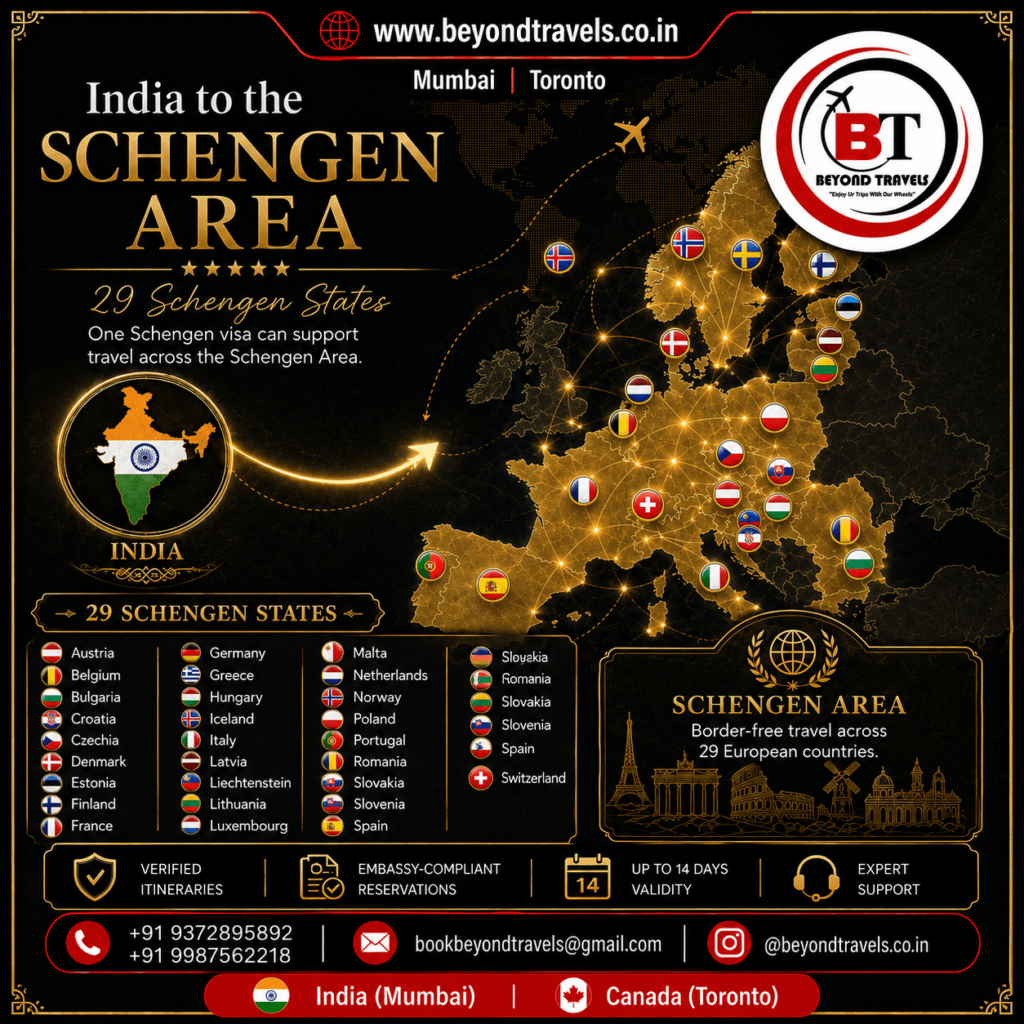
India to the Schengen Area: one visa, 29 countries
Here is the single most powerful fact in European travel: one Schengen visa can open the door to twenty-nine countries. From Paris to Prague, Rome to Reykjavik, a single approval lets Indian travellers roam a whole continent almost without borders. This is your clear guide to what the Schengen Area is and how to make the most of it.
Imagine landing in Amsterdam, taking a morning train to Brussels, driving on to Luxembourg by evening, and never once stopping for a border check. That is the quiet magic of the Schengen Area: a group of European countries that have agreed to let people move between them freely, as if the internal borders had simply dissolved. For a traveller from India, it turns the dream of a grand European tour into something wonderfully practical.
The number that matters is twenty-nine. That is how many countries currently make up the Schengen Area, and a single Schengen visa can support travel across all of them. Below, we explain exactly how that works, list every member country, and show you how to turn one visa into the trip of a lifetime.
What the Schengen Area actually is
The Schengen Area is a zone of European countries that have abolished passport and border controls between one another. Once you are lawfully inside, you can generally cross from one member country to the next without repeated immigration checks, the way you might travel between Indian states.
Crucially, this is a travel arrangement, not the same thing as the European Union. Some Schengen members are not in the EU, and the group includes microstates and non-EU nations too. What unites them is that shared, border-free travel space, and the single short-stay visa that opens it.
The 29 Schengen countries
Here is the full list of the twenty-nine Schengen member states as they stand in 2026. One visa, this entire map.
How one visa covers the whole area
The short-stay Schengen visa (Type C) is the key that fits every one of those twenty-nine locks. Understand these essentials and the system becomes beautifully simple.
- One visa, many countries. A single Schengen visa can support travel across the entire Schengen Area, so you do not need a separate visa for each country.
- Up to 90 days in any 180. The short-stay visa allows a total of up to 90 days within any 180-day period across the whole area, not 90 days per country.
- Apply through your main destination. You apply to the country where you will spend the most nights, or your first point of entry if the nights are equal.
- Border-free movement inside. Once admitted, you generally move between member countries without further visa checks.
One important correction to a common myth
A Schengen short-stay visa is not limited to 14 days. It permits up to 90 days within any 180-day period across the Schengen Area. Always travel within the exact validity and duration printed on your visa sticker.
A continent of choices
The real joy of the Schengen Area is how many completely different worlds sit within it. Here is a taste of the regions your single visa unlocks.
Western Europe
France, Germany, the Netherlands, Belgium and Luxembourg, home to iconic cities, art, canals and cafe culture.
Southern Europe
Italy, Spain, Portugal, Greece and Malta, where history, coastline, cuisine and sunshine come together.
Northern Europe
Scandinavia and the Nordics, including Sweden, Norway, Finland, Denmark and Iceland, for fjords, design and northern lights.
Central and Eastern Europe
Austria, Czechia, Hungary, Poland and more, rich in fairytale old towns, music and remarkable value.
The takeaway is simple: whether you crave alpine peaks, Mediterranean beaches, storybook cities or the midnight sun, all of it can sit inside a single, well-planned Schengen trip.
Making the most of one visa
With so much within reach, the temptation is to see everything at once. A little discipline turns a rushed dash into a memorable journey.
- Cluster by region. Group nearby countries, such as a France, Belgium and Netherlands loop, to spend more time exploring and less time in transit.
- Use the trains. Europe's rail network makes border-free travel effortless and scenic between major cities.
- Mind the main-destination rule. Apply through the country where you will spend the most time, which also shapes where you build your itinerary.
- Respect the 90-day count. Track your days across the whole area, not per country, to stay within the rules.
Ready to turn one visa into a proper plan? Our step-by-step application guide walks you through every requirement. [INTERNAL LINK: /travel-updates/how-to-apply-schengen-visa-from-india "read our Schengen visa application guide"]
Schengen, the EU and the euro
Three terms get tangled together constantly, so here is the simple untangling. They overlap, but each means something different, and knowing the difference makes you a sharper traveller.
- The Schengen Area is about border-free travel. It is the group of 29 Schengen countries your single visa covers.
- The European Union is a political and economic union. Most Schengen countries are EU members, but not all, and a few EU countries are not in Schengen.
- The eurozone is about currency. Many Schengen countries use the euro, but several, such as Switzerland and the Nordic nations outside it, use their own currencies.
For a visitor, the practical point is reassuring: your Schengen visa is what governs your travel across those 29 Schengen countries, regardless of which currency each one happens to use or whether it sits inside the EU.
Your Schengen journey, expertly mapped
A single visa covering twenty-nine countries deserves an itinerary that does it justice. That is exactly what our team builds, from the paperwork to the platform your train departs from.
- Verified itineraries. Embassy-ready plans and reservations that support your application and your trip.
- Flights, stays and rail. A smooth multi-country route stitched together across the Schengen Area.
- Insurance and expert support. Compliant travel insurance and real, reachable guidance from start to finish.
Frequently asked questions
How many countries are in the Schengen Area?
There are 29 countries in the Schengen Area as of 2026, and a single Schengen visa can support travel across all of them. It is a border-free travel zone, distinct from the European Union.
Can one Schengen visa be used for multiple countries?
Yes. A short-stay Schengen visa can support travel across the entire Schengen Area, so you can visit several member countries on one visa, subject to its validity and the permitted number of days.
How long can I stay in the Schengen Area on a short-stay visa?
Up to 90 days within any 180-day period across the whole area, not per country. Always travel within the specific validity and duration printed on your visa.
Is the Schengen Area the same as the European Union?
No. They overlap but are not identical. Some Schengen members are not in the EU, and the Schengen Area is specifically about border-free travel, unlocked by the Schengen visa.
Which country should I apply to for my Schengen visa?
Apply through your main destination, the country where you will spend the most nights. If nights are equal, apply to your country of first entry. Beyond Travels can help you decide and prepare.
One visa. Twenty-nine countries. Endless Europe
Let Beyond Travels plan your Schengen adventure, from a verified, embassy-ready application to a seamless multi-country itinerary. No obligation, no fee just to enquire.
Written by the Beyond Travels visa desk, your IATA and TICO certified travel and visa partner in Thane and Toronto.
Disclaimer: Schengen membership, visa rules and permitted stays are set by European authorities and can change without notice. This guide is general information reflecting details available at the time of writing, and is not legal advice. Always confirm current requirements and your visa's exact validity with the relevant embassy, the authorised visa centre, or Beyond Travels before travelling.