Air India Flight Dropped Nearly 300 Feet in Sudden Mid-Air Turbulence
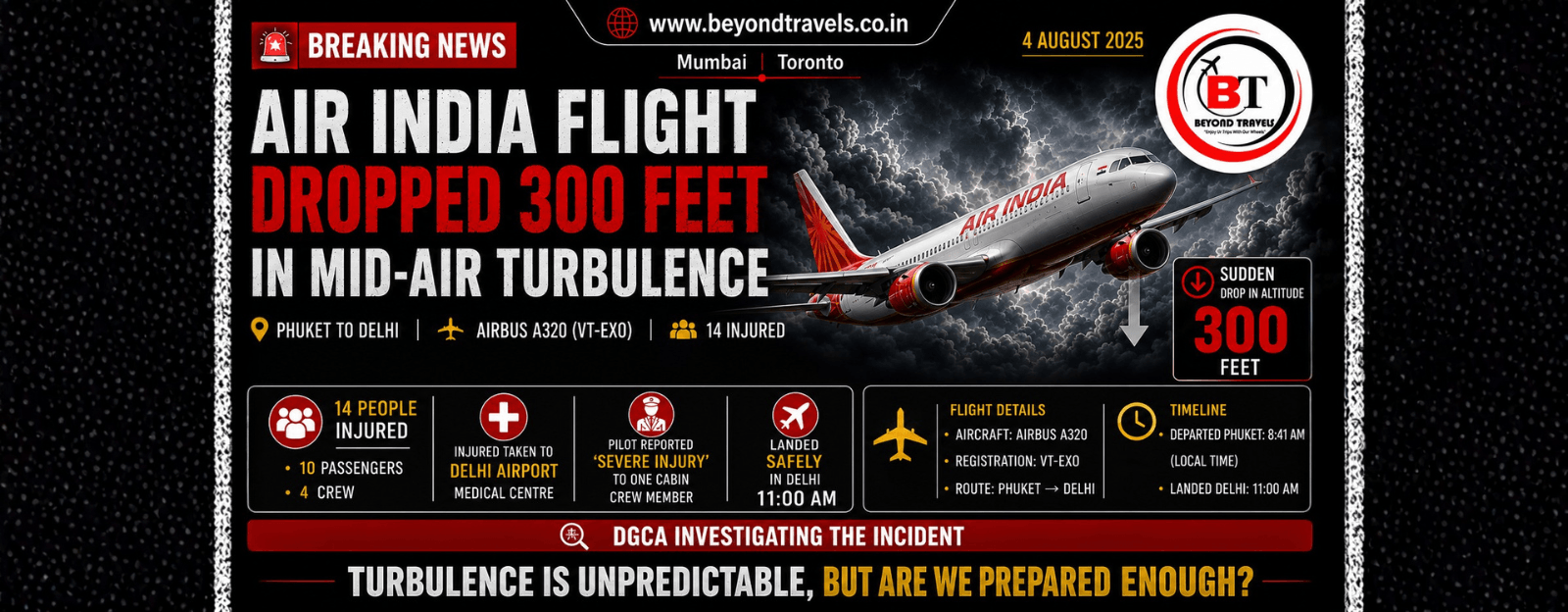
Air India Flight Dropped Nearly 300 Feet in Sudden Mid-Air Turbulence: What Really Happened on the Phuket-Delhi Route
A routine holiday flight home from Thailand turned into a few terrifying seconds no one on board will forget. On 4 August 2026, an Air India Airbus A320 flying from Phuket to Delhi plunged close to 300 feet in a burst of unexpected turbulence, leaving 14 people injured before the crew regained control and landed the aircraft safely. Here is a clear, calm breakdown of exactly what happened, why "clear-air" turbulence like this is becoming more common, and the practical steps every traveller can take to stay protected in the sky.
Flight AI2379 - At a Glance
What Happened On Board
The flight departed Phuket International Airport in the morning of 4 August 2026 for the roughly five-hour hop to Delhi - a hugely popular route for Indian families returning from a Thailand beach break. For most of the journey, everything was routine. Then, without the drawn-out warning that a visible storm usually gives, the aircraft hit a violent pocket of rough air and dropped by nearly 300 feet in a matter of seconds.
Inside the cabin, that kind of sudden sink feels like the floor briefly disappearing. Unsecured items, meal trolleys and anyone not strapped in can be thrown upward and then slammed back down. According to the airline, the captain reported one cabin crew member with a serious injury, another crew member hurt, and minor injuries to several passengers. In total, 14 people were injured - 10 passengers and 4 crew, though early news reports quoted slightly different figures as the situation was still being assessed.
Crucially, the pilots kept the aircraft under full control throughout. The A320 continued to Delhi and touched down safely at around 11:00 AM. Ground medical teams were ready on arrival: the injured were first attended to at the airport medical facility, and those needing further care were moved to Delhi-area hospitals for observation and treatment.
A Minute-by-Minute Timeline
- Morning departure - Air India flight AI2379 lifts off from Phuket bound for Delhi with roughly 134 passengers and crew on board.
- Cruise phase - The A320 (VT-EXO) settles into a normal, uneventful cruise across the Bay of Bengal corridor.
- The turbulence hit - The aircraft suddenly encounters severe turbulence and drops close to 300 feet. Passengers and crew not wearing seatbelts are jolted; 14 people are injured.
- Crew response - Pilots stabilise the aircraft, the crew secures the cabin, and the captain relays the injury report ahead to Delhi.
- around 11:00 AM - Safe landing - The flight lands safely in Delhi. Medical teams attend to the injured on arrival.
- Aftermath - India's aviation regulator, the DGCA, opens an investigation into the incident.
Why Does Turbulence Like This Happen?
Turbulence is simply rough, uneven air - and it comes in several forms. The most alarming is clear-air turbulence (CAT): invisible, radar-defying pockets of disturbed air that often form near jet streams at high altitude. Because there is no cloud or storm to see, it can strike a smooth-looking sky with almost no warning, which is exactly why it injures so many people who happen to be unbuckled at the wrong moment.
Other common triggers include thunderstorms and convective weather (frequent over South and Southeast Asia during the monsoon months), mountain waves near hilly terrain, and wake turbulence from other aircraft. The Phuket-Delhi corridor in early August sits right in monsoon season, when moisture-heavy, unstable air makes bumpy patches more likely.
Here is the reassuring part that pilots want every nervous flyer to know: modern aircraft such as the Airbus A320 are engineered to flex and absorb loads far beyond anything normal turbulence produces. Turbulence is deeply uncomfortable and can be dangerous to unrestrained people inside the cabin, but it very rarely threatens the structural safety of the aircraft itself. The injuries in incidents like this almost always come from movement inside the cabin - not from the plane being in danger.
Is Turbulence Getting Worse?
You are not imagining it - the data suggests bumpy flights are becoming more frequent. Aviation researchers have found that severe clear-air turbulence has increased measurably over recent decades, a trend widely linked to a warming atmosphere and shifting jet-stream behaviour. As global air traffic grows and more of us fly long-haul on holiday and to visit family abroad, encounters like the Phuket-Delhi drop are likely to make headlines more often. That is not a reason to fear flying; it is a strong reason to respect the humble seatbelt.
How to Protect Yourself From Turbulence - A Traveller's Checklist
- Keep your seatbelt fastened whenever you are seated - loosely buckled, even when the sign is off. This single habit prevents the overwhelming majority of turbulence injuries.
- Choose a seat over the wings if you are turbulence-sensitive; the ride is noticeably smoother near the aircraft's centre of gravity.
- Stow heavy bags properly in the overhead bins or under the seat so nothing becomes a projectile.
- Return to your seat quickly when the crew asks - they often see rough air on the radar or forecast before you feel it.
- Fly with children secured and follow crew guidance on infant restraints.
- Book comprehensive travel insurance that covers in-flight injury, medical care and trip disruption - the small print matters when the unexpected happens.
What This Means for Travellers Flying To and From Thailand
Thailand remains one of the most-loved destinations for Indian travellers, and Air India's direct connections to Phuket and Bangkok are a big reason why. A single turbulence incident - however dramatic - does not change the fact that flying is statistically one of the safest ways to travel. The aircraft landed safely, the crew performed exactly as trained, and the regulator is doing precisely what it should by investigating so the industry keeps learning.
If you have upcoming travel on this route, there is no need to cancel or worry. The smartest response is preparation, not panic: build a little schedule buffer, keep your belt on, and make sure your travel protection and documentation are sorted before you fly. At Beyond Travels, our team helps travellers across India and Canada plan journeys that are not just affordable, but genuinely well-protected - from flight bookings and travel insurance to complete tour packages.
Frequently Asked Questions
Which Air India flight dropped 300 feet in turbulence?
An Air India Airbus A320 (registration VT-EXO) operating the Phuket-to-Delhi route on 4 August 2026 dropped close to 300 feet after hitting sudden, severe turbulence. It landed safely in Delhi at around 11:00 AM.
How many people were injured?
The airline reported 14 people injured - 10 passengers and 4 cabin crew - including one crew member with a serious injury. Some early news reports quoted a slightly higher number while the situation was still being assessed.
Was the aircraft damaged or in danger of crashing?
No. Modern aircraft like the A320 are built to withstand turbulence loads far beyond normal encounters. The pilots kept full control and landed safely. Turbulence injuries almost always come from movement inside the cabin, not from any threat to the aircraft's structure.
What is clear-air turbulence, and why is it dangerous?
Clear-air turbulence is invisible rough air that forms near jet streams, often without any cloud or storm to warn pilots or radar. Because it can strike a smooth sky suddenly, it frequently injures passengers and crew who are not wearing seatbelts at the time.
How can I avoid turbulence injuries on my next flight?
Keep your seatbelt fastened whenever you are seated, choose a seat over the wings, stow bags securely, return to your seat promptly when asked, and travel with comprehensive insurance that covers in-flight injury.
Fly Prepared, Not Worried
From flight bookings to travel insurance and complete visa support, Beyond Travels helps you travel safely and stress-free - across India, Canada and 195+ countries.
Talk to a Travel Expert More Travel UpdatesDisclaimer: This article is an informational travel update prepared by the Beyond Travels editorial desk based on publicly reported details, which may be revised as official investigations by the DGCA and Air India conclude. Figures such as the number of injured were still being confirmed at the time of publishing. Beyond Travels is not affiliated with Air India and does not represent the airline. This content is for general awareness and does not constitute safety, medical or legal advice.